This post may contain affiliate links. If you click the link and purchase, I may receive a small commission at no additional cost to you. Thank you for your continued support.

Lover27sKnotBorder

Step-by-Step Crochet Tip

If you’ve ever wanted to give a handmade piece that airy, lacy finish without complicating your pattern, the Solomon’s knot border is exactly the technique you’re looking for. Also known as the “lover’s knot,” this stitch creates an open, delicate edge that adds drape, movement, and a touch of elegance to almost any crochet project.

This stitch is especially perfect for spring, summer, or even fall makes. The Lover’s Knot creates a delicate lightweight lacy openwork pattern that allows air to circulate keeping you cool and comfortable during summer and spring.

You can make Solomon’s Knot stitch using a single color or mix and match colors based on your desired look. You can wear your makes as garments or make accessories for layering up and accentuating your fashion.

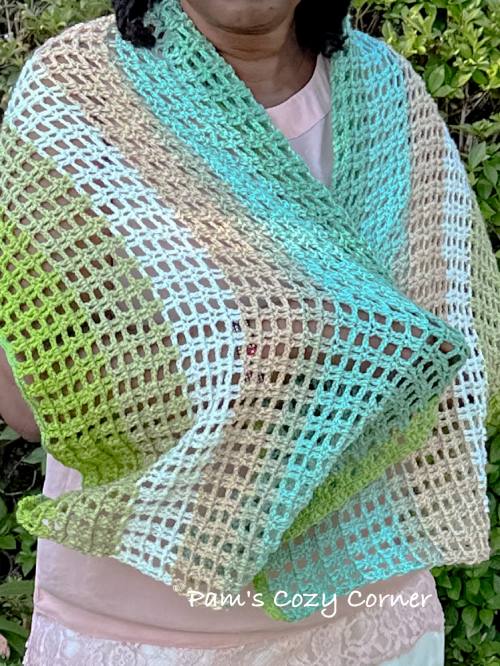
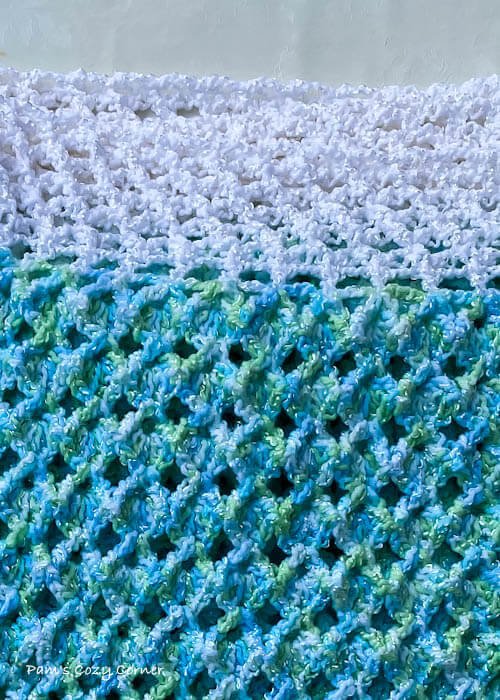
If you don’t want to use your whole project using a Solomon’s Knot but you would still like to have it in your crochet projects, then you can use it to make the border or edge on your projects like blankets or scarves. Below is a blanket I made with Solomon’s Knot Edging.

What Is a Solomon’s Knot Border?

A Solomon’s knot border is a decorative crochet edging made up of elongated loops connected by single crochet stitches. Unlike a dense, solid border, this stitch creates negative space between each knot, giving your project a lighter, more open look. It’s a popular choice for adding a finishing touch to Anaya Baby Blanket, where a soft, flowing edge really lets the design shine.

.

Crochet Shell Blanket with Solomon's Knot Border

Tips for a Clean, Even Solomon’s Knot Border

The biggest challenge with this stitch is consistency — since you’re manually stretching each loop, it’s easy for the lengths to vary. Here are a few tricks to keep things looking polished:

  • Use a measuring guide. Hold a finger, popsicle stick, or small ruler against your work as you stretch each loop to keep the lengths matching.
  • Keep tension steady. Try not to pull too tightly when you complete the single crochet, or your knots will bunch up instead of lying flat.
  • Practice on a swatch first. Before adding this border to Anaya Baby Blanket, work up a small test swatch to get comfortable with the loop length and rhythm.
  • Count your knots. For symmetrical borders (especially on garments or blankets), count your stitches per side so the pattern stays balanced.

Where to Use a Solomon’s Knot Border

This edging isn’t just pretty — it’s versatile. Consider adding a Solomon’s knot border to:

  • Shawls and wraps, where the open lace adds drape
  • Scarves, for a lightweight, flowing edge
  • Blanket trims, especially on lighter-weight yarns
  • ANAYA BABY BLANKET where the lacy detail complements the overall design.

Skill Level

Intermediate

Materials

A project that you want to make the border

Yarn in the same weight and desired color

Same hook size as the project

Scissors

Tapestry needle

Abbreviations

Ch(s)- chains

St- stitch

Dc- double crochet

Ch-2 sp – chain 2 space

Special Stitch

Solomon’s Knot:

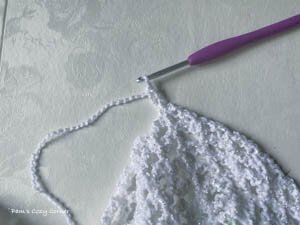
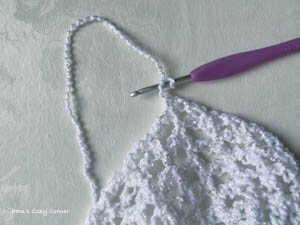
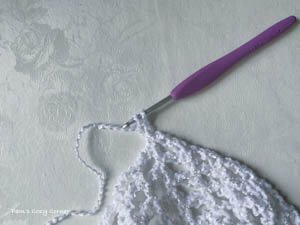
  • Starting with one loop on the hook, draw this loop out to the desired length

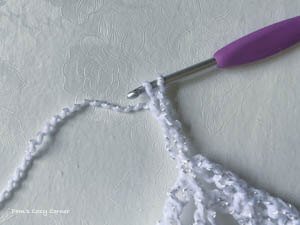
  • Thread over the hook, and draw through (as you would if you were making an ordinary chain stitch), but with the single back thread kept the same length as the first long loop, keeping the single back thread of the long-chain separate from the two front threads.

  • Next, insert the hook under this single back thread.

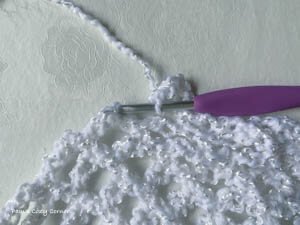
  • Wrap the thread over the hook again and draw a loop through.

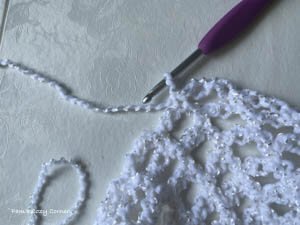
  • Wrap again and draw through both loops on the hook.

  • You are essentially creating single crochet stitches separated by elongated openwork Love Knots.

Solomon’s Knot Border Tutorial

Attach border yarn to any of the corners or end of your project

Row 1: ch 3, *dc, ch 2 evenly across to the next corner making sure your tension marches the blanket tension with (dc, ch 2, dc ch 2, dc) in the corner st.

Row 2: Sc in the first stitch, * make 2 Solomon’s Knot stitches, skip 2 chs and one stitch, sc in the next stitch, rep * to end, join in first sc stitch.

Row 3: Make one Solomon’s Knot stitch, sc in the st between the next 2 Solomon’s Knot sts, * make 2 Solomon’s Knot sts, sk 2 loops st, sc in next sc, rep around, ending with sc in last sc.

Rep row 3 until you have your desired width.

Fasten off and weave in ends.

Remember that the tension and spacing of your stitches will affect the overall look of your border, so be sure to practice and experiment until you achieve the desired effect. You can also try adding different colors or textures to your border to make it even more unique and eye-catching.
Similar Posts